The thing that surprised me the most about Raspberry Pi 5 when it launched in 2023 was that it supports PCIe drives. Naturally, the first thing that came to my mind upon learning this was the possibility of turning rummy 365 it into a veritable desktop PC capable of gaming.
Unfortunately, there were no official Raspberry Pi PCIe SSD solutions upon release, and while the company eventually released (HAT meaning Hardware Attached on Top, and not, like, an actual hat) to allow for SSD connectivity, you still had to go third-party for the SSD. Now, however, Raspberry Pi Ltd has (via ) official SSDs and that combine these with the M.2 HAT+.
Earlier in the year when I decided to speed up my Raspberry Pi 5, I the to connect a . To connect an SSD you have to use a HAT like the Pimoroni Base—or the official Raspberry Pi one—because the Pi 5 doesn't have an M.2 connector built into the board. It has a rummy 51 PCIe connector that you can use a ribbon cable to connect a HAT to; this way lots of different PCIe devices can be used.
In of the rummy best Raspberry Pi 5, I pointed out that it's the first Raspberry Pi to be really viable as a desktop PC. Its performance gains over the Pi 4—especially when combined with an active cooler—make it able to handle most everyday desktop use cases.
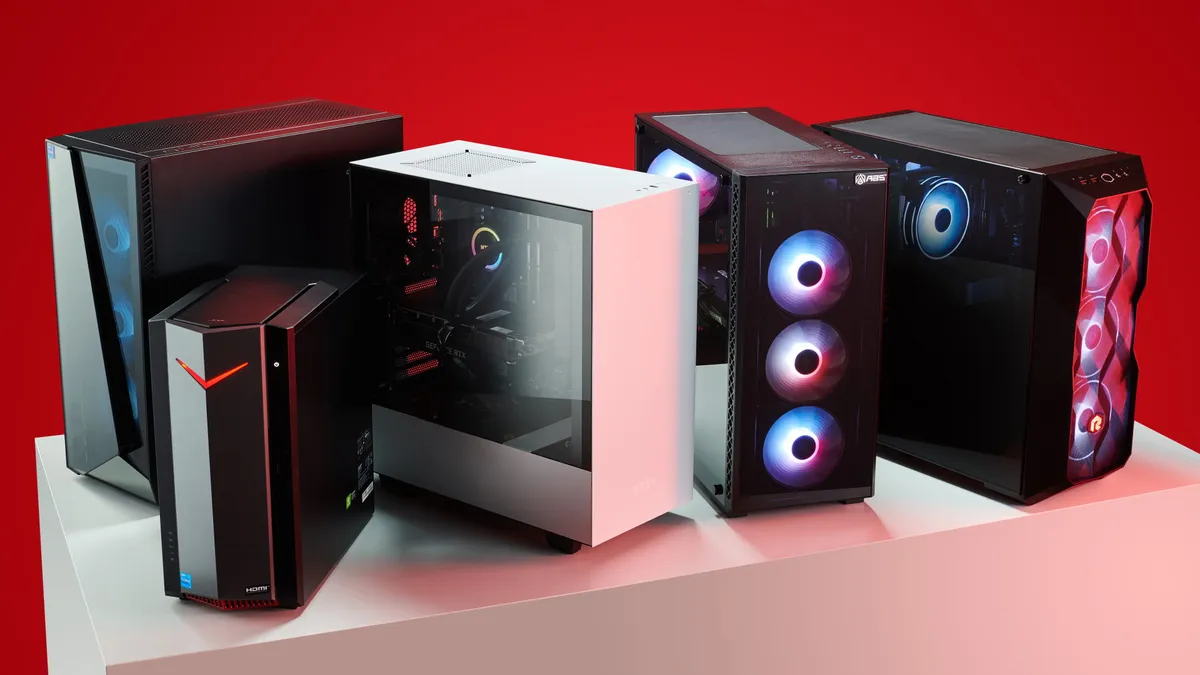
: The top pre-built machines.
: Great devices for mobile gaming.
Note that the new Raspberry Pi SSDs are PCIe 3.0 compatible, too, even though the Pi 5 only officially supports PCIe 2.0. You can unlock 3.0 speeds, however, by edding the Pi's config file and adding "dtparam=pciex1_gen=3" to the bottom. It's a simple way to overclock your Pi 5 + SSD setup.
Raspberry Pi says, "The entry-level 256GB drive is priced at $30 on its own, or $40 as a kit; its 512GB big brother is priced at $45 on its own, or $55 as a kit. Both densities offer minimum 4KB random read and write performance of 40k IOPS and 70k IOPS respectively."
While adding such an SSD to your Raspberry Pi 5 has plenty of other uses, gaming is certainly one of them. Hell, Jeff Geerling recently .
However, if not using it for running Steam on the Raspberry Pi Linux OS, I, for one, would be inclined to use the SSD to house a retro gaming OS such as or . Whichever gaming solution you opt for, there's now an officially licensed way to upgrade your Raspberry Pi 5 to make getting there that much better.